Building Resilient Mindsets

Building Resilient Mindsets

A practical adolescent guide to self-mastery — building resilience, focus, and coherence under real-world pressure.

Adolescence is a field of change: identity, friendship, school, family, social media, and shifting emotions all pulling at once. This book offers a steady path through that swirl — combining Stoicism, martial arts, psychology, Jungian individuation, and Taoism into usable tools you can practise daily. Expect clear chapters, reflection prompts, and practical exercises to help you respond rather than react, make wiser choices, set boundaries, communicate with clarity, repair after mistakes, and live more in alignment with your values.

What this book helps with

  • Clarifying who you are and what you stand for (identity + values).
  • Learning what you can control — and dropping what you can’t — to reduce stress and regain agency.
  • Building coherence under pressure: staying steady when emotions, peers, or circumstances spike.
  • Creating daily mindset practices (discipline, breath, rhythm, reflection) that actually stick.
  • Handling friendship, family, and belonging with more clarity, respect, and self-respect.
  • Turning mistakes and setbacks into growth: learning, adapting, and coming back stronger.
  • Improving inner talk: shifting self-criticism into constructive self-guidance.
  • Navigating the digital field (attention, comparison, dopamine loops, boundaries with tech).
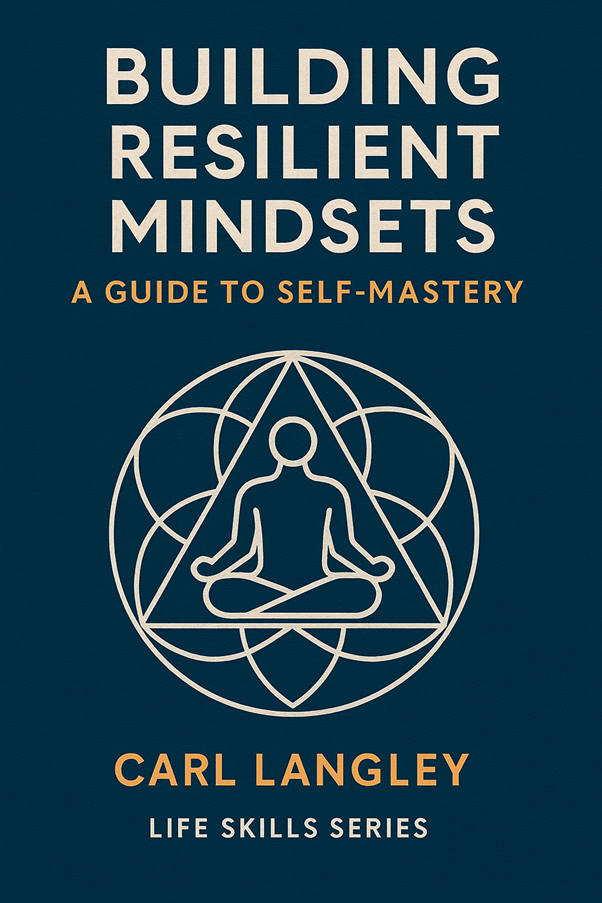
Sample Passage


Adolescence is a time of discovery and challenge. It is a stage when your sense of identity is being formed, tested, and reshaped by friends, school, family, social media, and your own shifting emotions. In the middle of all this change, one truth becomes clear: Your greatest strength is the ability to master yourself. Self-mastery is not about control or perfection. It is about steadiness, resilience, and authenticity. It means knowing what you value, thinking critically, responding wisely instead of reacting impulsively. Alongside these, the thread of coherence runs throughout. Coherence means alignment — between thoughts, emotions, body, values, and actions. It is what steadies you when things feel chaotic, and what helps you come back to balance after setbacks.

Building Resilient Mindsets

What's inside

  • The Adolescent Field — understanding the pressures shaping you (school, peers, identity, emotion).
  • What You Can Control (and What You Can’t) — the agency lens that cuts stress and clears action.
  • Coherence Under Pressure — staying steady when anger, anxiety, shame, or overwhelm hits.
  • Daily Mindset Practices — discipline, breath, rhythm, reflection, and how to make habits stick.
  • Friendship, Family, and Belonging — respect, loyalty, influence, and self-respect without performance.
  • Mistakes, Adversity, and Growth — learning from setbacks and rebuilding confidence after falls.
  • Inner Talk and Voice — shifting self-criticism into constructive self-guidance.
  • Archetypes and the Journey of Becoming — persona, shadow, and becoming more authentic over time.
  • Flowing with the Tao — balance, opposites, and wu wei (effortless action) in real life.
  • The Digital Field — attention, comparison, dopamine loops, and boundaries with tech.
  • Values, Virtue, and Purpose — choosing principles to live by, not just goals to chase.
  • A practical toolkit — decision-making, boundaries, communication, forgiveness, repair, and living in alignment.
Building Resilient Mindsets

Sample Passage


The digital world is one of the strongest fields shaping adolescence today. Social media, messaging apps, online games, and constant notifications create both opportunities and challenges. The digital field can connect you, inspire you, and help you learn — but it can also scatter your attention, pull you into comparison, and test your values. Self-mastery lens: Mastery in the digital field means using technology with awareness rather than being used by it. Every swipe, click, and scroll pulls on your attention. Psychologists call this the “attention economy” — your focus is the product being sold.

Self-mastery means noticing where your attention goes and choosing where to place it. Practical Tool – The One-Minute Check: Each time you pick up your phone, pause for one breath and ask: Why am I opening this? If there’s no clear reason, put it down.

Who it’s for
  • Teenagers who want more control of their own mind: focus, calm, confidence, and direction.
  • Young people who feel pulled by pressure, comparison, or mood swings and want steadier grounding.
  • Readers who want practical tools, not motivational hype: habits, prompts, and clear steps.
  • Teenagers navigating friendship drama, belonging, boundaries, and self-respect.
  • Anyone dealing with setbacks (school stress, mistakes, rejection, loss, change) and wanting to bounce back.
  • Parents, mentors, and educators who want a non-preachy framework to support adolescents without controlling them.

Start with what you actually need right now. If your week is stressful, begin with control/agency and coherence-under-pressure. If it’s distraction, begin with the digital field and habit-building. Read one chapter, choose one practice, and run it for seven days. Keep it simple: you’re building a mindset like you build strength — through repetition, not intensity. Come back to the same tools when life changes, and treat this book as a kit you keep on your shelf for recalibration.

  • 7-day practice loop: choose one tool (breath, reflection, attention check) and do it daily for a week.
  • Pre-pressure routine: 2 minutes before school, sport, a test, or a social situation — breathe, set intent, choose a principle.
  • After-action review: after a hard moment, write: what happened, what I felt, what I did, what I’ll do next time.
  • Digital discipline mode: set rules for your phone (time windows, no-bed scrolling) and track mood/focus changes.
  • Shadow/trigger reflection: when something hooks you, ask: what did this touch in me, and what do I need to own or change?
  • Mentor mode: read one chapter with a parent/coach/teacher and agree one small action for the week (then review together).

How it connects

What to read next

Building Resilient Mindsets sits in your Life Skills Series as the adolescent-facing companion to the wider coherence library. Where your foundational and field-based books build the deeper frameworks, this one translates the same principles into a teen-readable toolkit: self-mastery, discernment, regulation, values, boundaries, communication, repair, and alignment. It also pairs naturally with Raising Resilient Minds: that book equips adults to shape the environment; this one helps young people build the inner tools to meet that environment with more steadiness and sovereignty.

  • Raising Resilient Minds — for the parent/educator side of the same developmental arc (environment, scaffolding, scripts).
  • The Coherent Mind — for the deeper model of regulation, identity, integration, and designing for coherence.
  • Thermodynamics of the Mind — for understanding stress/pressure, recovery, and rhythm as a practical resilience lens.
  • Auditism – The Reflective Art of Coherence — for reflective tools, repair frameworks, and coherence auditing across relationships and systems.
  • The Field and the Flow — for learning to “see” tone, resonance, and field dynamics in everyday life.
  • A Way of Coherent Power — for disciplined strength, composure, and non-dominating power (martial framing, applied ethics).
Building Resilient Mindsets

Where to buy this book

Availability details will appear here shortly, including:

Release date

Formats (ebook / paperback / hardback, where applicable)

Where to buy (direct + retailers)

Scroll to Top