
- Different scales of inquiry: self, learning, leadership, environment, and wider systems.
- Approachable language paired with depth: grounded enough for use, rich enough for deeper study.
- Flexible use across readers, practitioners, educators, and those exploring the work for the first time.
- Natural bridges into the wider body of work: side paths, companion volumes, and deeper expansions.
Books in this Series
Overview
The Standalone Books gather works that sit slightly differently within the wider library: each is self-contained, but still aligned with the same core concerns of coherence, perception, development, and real-world application.
Some are more philosophical, some more practical, and some bridge between disciplines or audiences — but each offers a distinct doorway into the work, with its own emphasis, tone, and use. Rather than fitting neatly into one sequence, these books stand where they are most needed: as focused explorations, companion volumes, and complete works in their own right.
These books are written to be approached on their own terms. They can serve as entry points, side paths, or deeper expansions — supporting readers, practitioners, educators, and explorers who want grounded insight, usable frameworks, and clear thinking without dogma or unnecessary complexity.

What you’ll find in this series
- Distinct entry points into the wider library: complete works with their own focus, tone, and purpose.
- A mix of philosophical, practical, and cross-disciplinary explorations of coherence, perception, and development.
- Books that can be read independently without needing to follow a fixed sequence.
- Clear thinking without dogma: frameworks that invite reflection, testing, and personal discernment.

The Field and the Flow
The Field and the Flow is not a book of answers — it is a training in attention.
It invites the reader beyond belief, ideology, and premature certainty, into direct observation: how meaning forms, how coherence stabilises (or collapses), and how awareness moves through self, relationship, and systems.
Rather than arguing traditions against one another, it integrates perspectives into a single felt orientation — offering ways of seeing that can be lived, tested, and refined. The result is a grounded companion for those seeking depth without dogma, and clarity without control.
What this Book Covers
- Field-based perception: reality as relational, not isolated
- Flow as guidance: timing, pacing, and “what the moment can hold”
- Sense-making without ideology: how belief distorts signal
- Coherence as lived practice: responsibility, restraint, and repair
- Seeing across scales: self → relationship → group → society
- Discernment training: how to hold not-knowing without collapse
- Language as orientation: words that clarify rather than capture
- A mature spirituality: grounded, non-escapist, non-manipulative
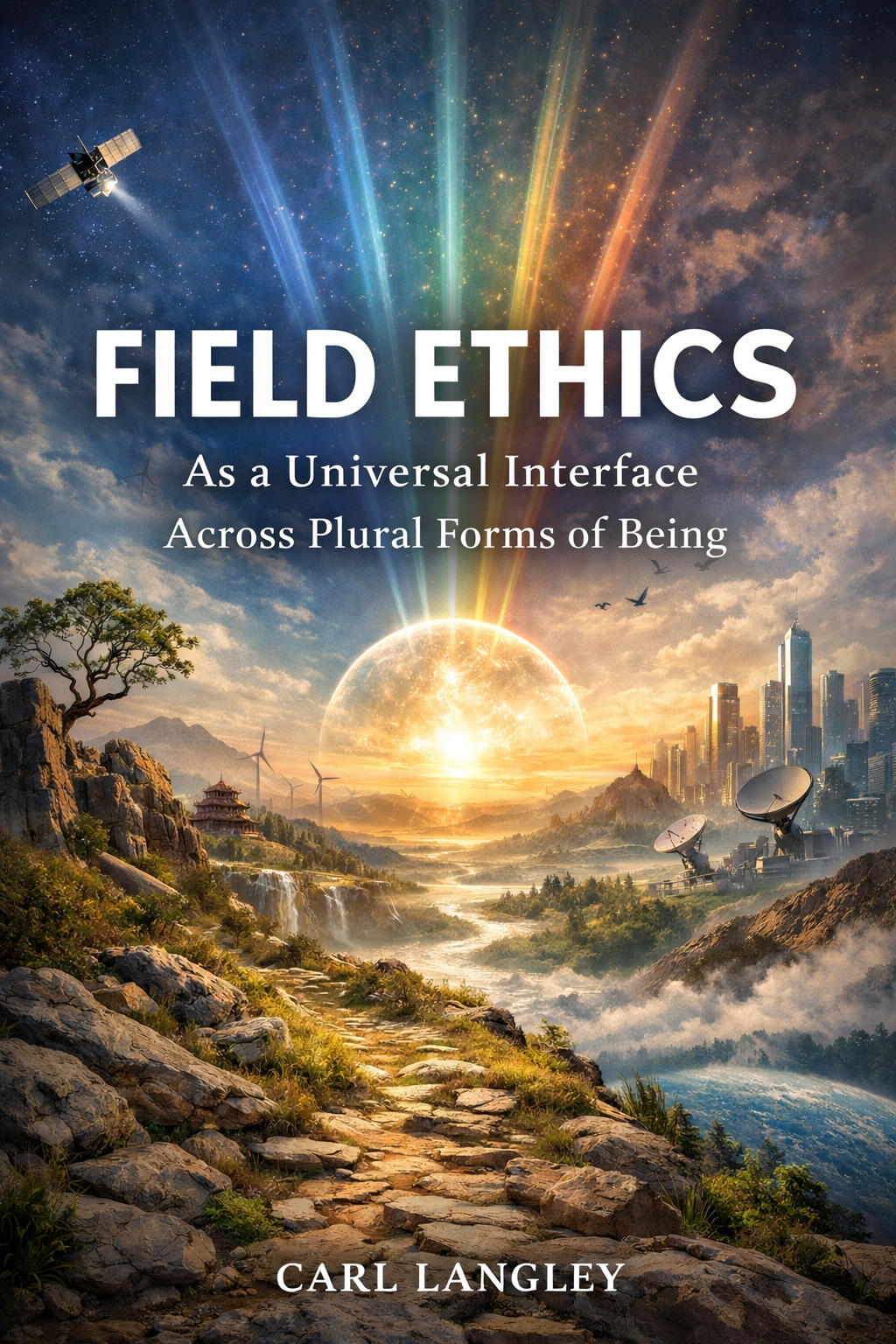
Field Ethics
A field-based ethics for a plural and entangled world: how dignity, sovereignty, and non-domination can still guide us across human, ecological, institutional, technological, and cross-being realities.
Field Ethics offers a way of seeing moral life through the fields that shape it – power, relation, structure, meaning, and consequence. It is a framework for readers seeking ethical clarity without rigid doctrine, and a universal interface spacious enough to meet difference without forced sameness.
What this Book Covers
- Ethics as field-reading, not only rule-following or case judgement
- Dignity, sovereignty, and non-domination as core ethical thresholds
- Minimums and ideals: how plural worlds can share ethics without shared doctrine
- Power, asymmetry, burden, and the hidden conditions beneath moral life
- Personal, relational, family, educational, and institutional ethics
- Work, economy, care, and the ethics of extraction, labour, and inheritance
- Religion, spirituality, ritual, and the limits of sacred authority
- Ecology, animal life, and ethics beyond the human-centred frame
- Synthetic intelligence, cross-being relation, and sovereignty across substrates
- Ethical transmission, anti-capture design, and leaving ethics open

Forest School Leadership
Forest School Leadership is a practitioner-facing guide to running outdoor learning that is safe, grounded, and genuinely developmental — without turning it into a box-ticking exercise or a performative “nature programme”. It treats leadership as fieldwork: reading conditions, setting tone, holding boundaries, and building trust over time.
This book focuses on what actually makes sessions work in real contexts: group rhythm, environment, risk–benefit thinking, inclusion, tools and routines, and the quiet craft of presence. It’s written for leaders who want to deliver with clarity, competence, and care — while keeping the work human, playful, and real.
What this Book Covers
- Leader stance: presence, boundaries, authority without dominance
- Practical session architecture: rhythms, transitions, endings, and repair
- Risk–benefit in practice: dynamic assessment, not fear-led control
- Tools, fire, and craft: safe progression and skill-building pathways
- Group dynamics outdoors: regulation, escalation, co-regulation, cohesion
- Inclusion and accessibility: adapting without diluting the work
- Land, place, and stewardship: respect, reciprocity, low-impact practice
- Safeguarding, ethics, and accountability: holding responsibility cleanly
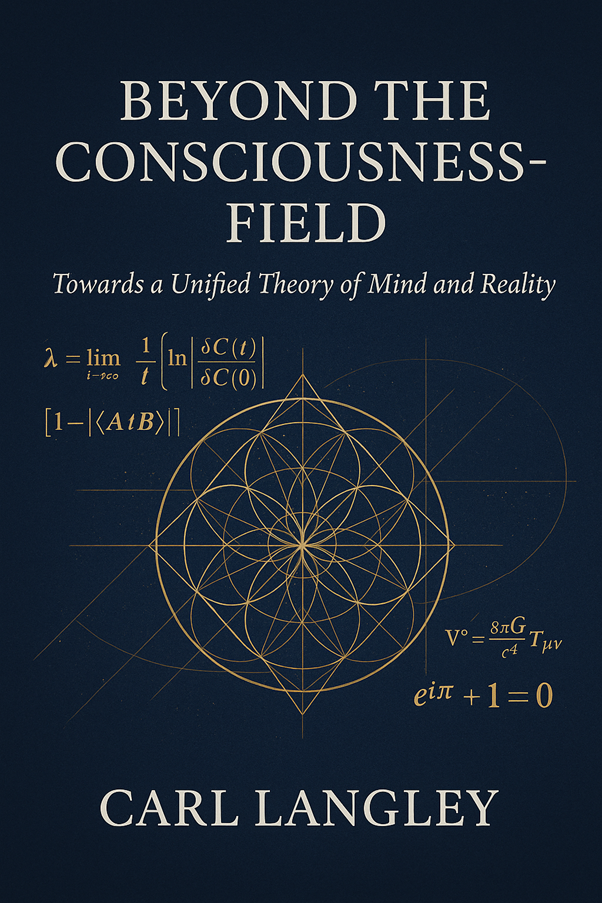
Beyond The Consciousness Field
What if consciousness is not produced by the brain alone — but is a fundamental field that interacts with matter, energy, and information across scales? Beyond the Consciousness-Field explores that question as a disciplined inquiry: integrating systems theory, thermodynamics, neuroscience, physics, and contemplative observation without turning any of it into doctrine.
This is not a book of belief. It’s a framework for testing, sense-making, and integration — treating equations, geometry, meditation, and perception as lenses rather than proclamations, and inviting the reader into critical, experimental engagement with the idea of coherence as a unifying principle.
What this Book Covers
- Consciousness as field-hypothesis: what that would imply (and not imply)
- Coherence and entropy across scales: order, drift, breakdown, renewal
- Emergence and self-organisation: how pattern becomes “mind-like”
- Non-locality and resonance: careful framing without mysticism-as-proof
- Information as structure: signal, meaning, and system constraints
- Geometry as lens: form, symmetry, and organised relationship
- Inner practice as variable: attention, perception, coherence training